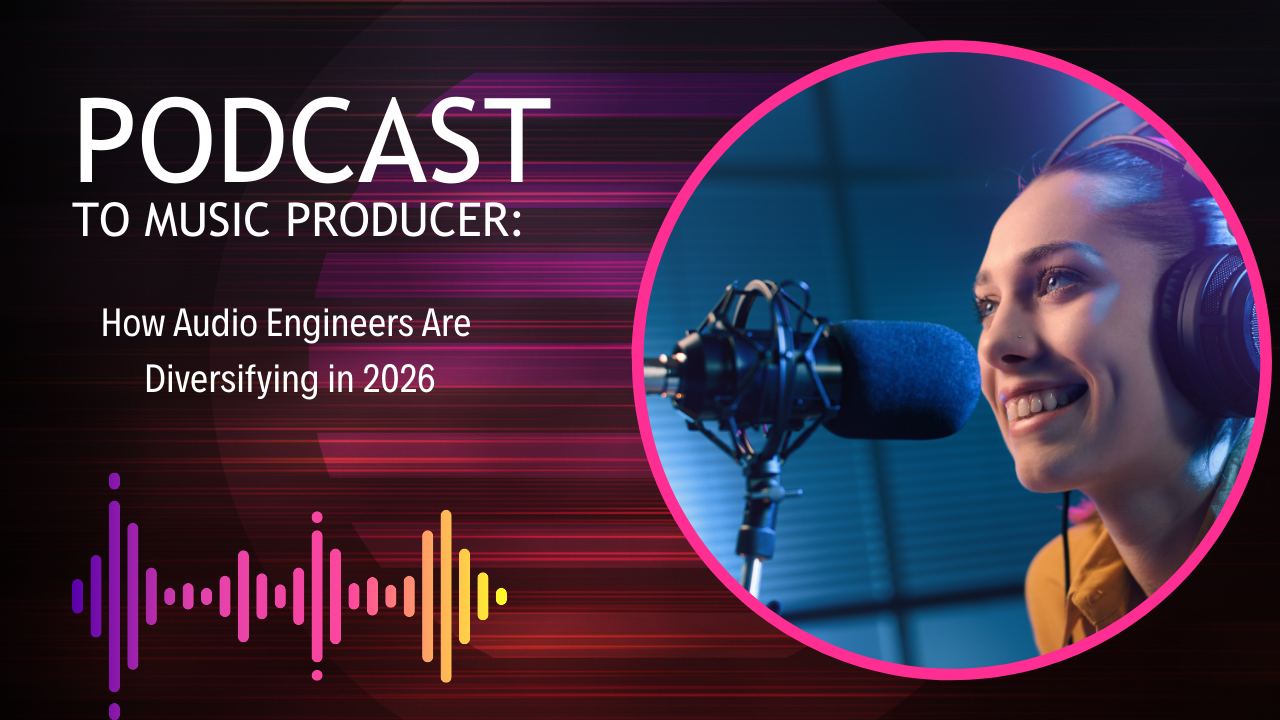
In 2026, “audio engineer” rarely means just one thing.
You might be mixing a rap record in the morning, cleaning dialogue for a podcast in the afternoon, and building a soundscape for a documentary in the evening. The lines between music, podcasting, and other audio work are not just blurred, they are actively overlapping.
This is not a side quest. It is a survival strategy.
The podcast economy is huge, content demand is exploding, and the engineers who learn to move between podcast production and music production are the ones building stable, future proof careers.
This article breaks down what is actually happening in the market, what skills transfer cleanly between podcast and music work, and how audio engineers are using platforms like EngineEars to turn that diversification into real revenue.
The podcast boom is not a fad, it is a full industry
Multiple market analyses agree on one thing: podcasting is big business now.
-
One recent analysis estimated the global podcast market at about 32.5 billion dollars in 2025, with projections rising above 170 billion dollars by 2032, based on a compound annual growth rate above 25 percent.
-
Another report puts the wider “podcasting market” at 32.48 billion dollars in 2025, with a forecast above 360 billion dollars by 2035, projecting a CAGR of around 27 percent between 2026 and 2035.
-
As of mid 2025, there were an estimated 4.5 million active podcasts worldwide, with nearly 487,000 new shows launched in just three months, according to one industry breakdown.
At the same time, analyst reports on audio production studios note that studios are “riding a wave of diverse demand, from streaming giants to booming podcast and advertising markets,” and that studios which broaden their offerings are best positioned to benefit.
Put simply: there is a lot of spoken word audio being made, and it needs to sound good. That is where audio engineers come in.
Why audio engineers are moving into podcast and back again
Education and career guides aimed at engineers are now explicitly telling people to diversify.
-
Dark Horse Institute’s 2025 guide to sound engineer career paths lists podcast audio editing alongside studio tracking, mixing, live front of house, and game audio as viable niches.
-
Careers in Music advises engineers to “diversify your skill set” into adjacent areas like audio post production if one segment of the industry slows down.
The message is consistent: do not lock yourself into one format.
Podcast work has become a natural extension of traditional engineering because it relies on the same core skills:
-
Editing, cleaning, and arranging audio
-
EQ and compression to improve clarity and tone
-
Noise reduction and de-essing
-
Balancing levels for a consistent listening experience
A professional audio engineer writing about podcast sound quality notes that a skilled engineer can have “a huge impact” on the way audiences experience a podcast, reminding readers that podcasts are still an audio first medium.
On community forums like r/audioengineering, working engineers who move into podcast roles emphasize the importance of things like natural edits, breathing, pacing, and speech clarity, along with tasteful EQ and compression.
For music engineers, none of this is foreign. It is the same ear, just applied to different storytelling.
From podcast engineer to music producer: the transferable skills
Here is where the shift gets interesting: the workflow that makes you great at podcasts is almost the same workflow that makes you effective as a producer.
1. Editing and arrangement instincts
Podcast editing forces you to think about:
-
Narrative flow
-
When to cut and when to leave silence
-
How to keep listeners engaged
Those same instincts transfer directly into:
-
Arranging songs so sections land with intention
-
Cutting unnecessary bars or repeated sections
-
Building intros and outros that feel intentional rather than padded
That “keep the listener here” mentality is invaluable in the streaming age for both music and podcast work.
2. Tone shaping for clarity
Articles on podcast engineering emphasize core technical skills such as audio editing, EQ, compression, and noise reduction as central to the craft.
Those skills are the same ones music engineers rely on for:
-
Vocal presence and intelligibility
-
Low end control
-
Dynamic control on drums, bass, and leads
If you can make a host’s voice sound present, natural, and consistent across a forty minute interview, you are building the chops to handle topline vocals or lead instruments in a record.
3. Storytelling through sound
Guides on hiring audio content creators for podcasts consistently highlight:
-
Script understanding
-
Audience engagement
-
Audio branding
-
Emotional pacing
Music producers do the same thing with:
-
Tempo and groove
-
Harmonic movement
-
Arrangement choices
-
Texture and space
The medium changes, but the job is still telling a story in sound.
How engineers are structuring diversified careers in 2026
Career resources for audio professionals are increasingly describing portfolio careers: engineers who combine several related income streams.
A typical diversified setup might include:
-
Music mixing and mastering for artists and labels
-
Podcast production for creators, brands, and media companies
-
Audio post for YouTube, documentaries, or social content
-
Live sound or broadcast work when schedules allow
The logic is simple. If album budgets are slow one quarter, you still have retainers from a weekly podcast. If a big podcast client takes a break between seasons, you focus on EPs and singles. You are not at the mercy of exactly one pipeline.
Industry analysis of audio production studios backs this up: reports describe studios serving a blend of podcast, advertising, streaming content, and music clients in order to stabilize revenue.
Practical ways to diversify from podcast to music (and back)
All of this is only useful if you can turn it into a real plan. Here is a practical path, grounded in what current guides and platforms are encouraging engineers to do.
1. Define your service menu clearly
Dark Horse Institute’s career guide tells engineers to explicitly define their services: studio tracking, mixing, podcast editing, game audio, and more.
Instead of just calling yourself an “audio engineer,” list services like:
-
Podcast editing and sound cleanup
-
Mix and master for singles, EPs, and albums
-
Music for podcasts and branded content
-
Vocal recording and tuning
That clarity makes it easier for clients to understand what you actually do.
2. Build workflows that work in both worlds
The platforms and tools you use for podcast work, music production, and delivery increasingly overlap.
For example:
-
DAWs like Pro Tools, Logic Pro, and Ableton Live are widely used for both music and post production. Their current versions are actively marketed for multi use audio workflows.
-
Distribution and collaboration platforms like EngineEars let you handle music mixing, mastering, and studio bookings in one place, with professional profiles that show your bio, equipment list, photos, and credentials.
If you position yourself as someone who understands both destinations, it becomes natural for a podcast client to ask you about custom music, or for a music client to ask if you can help with their interview series or behind the scenes content.
3. Use platforms that actually help you get found
The hardest part of diversification is not learning the skills, it is finding the clients.
EngineEars describes itself as a leading online platform for audio engineers and studio owners to grow revenue, streamline workflows, and attract clientele, with tools for listing services, managing bookings, and collaborating at scale.
For an engineer who wants to move between music and other audio work, that kind of platform gives you:
-
A central profile you can send to both artists and podcasters
-
A way to present your services professionally without custom websites for each niche
-
A booking layer that keeps communication and payments organized
You still have to do the positioning and the work, but you are not starting from zero infrastructure.
Where this is going next
The wider audio and media industry is only getting more converged.
-
Podcasting is on a steep growth curve, with estimates placing the global market above 32 billion dollars in 2025 and projecting strong double digit growth for the rest of the decade.
-
Audio production studio reports explicitly connect their future to a mix of streaming content, podcasting, and advertising work.
-
Career guides for audio engineers keep repeating the same advice: broaden your skills, expand your niches, and treat diversification as part of the job, not an afterthought.
For audio engineers, that means the “podcast versus music” question is fading into “audio career as a whole.”
If you can move comfortably between podcast production, music production, and post work, you are not chasing trends, you are aligning yourself with where the entire audio landscape is moving.
The gear will keep evolving, the platforms will keep changing, and new formats will appear. What will stay constant is simple:
-
Clear sound
-
Strong storytelling
-
Engineers who know how to translate both into any format, whether it is a charting single or a top tier podcast.
If you want to turn that versatility into something sustainable, this is the moment to define your service stack, get your profile in front of the right clients, and build a career that is bigger than any single lane.
