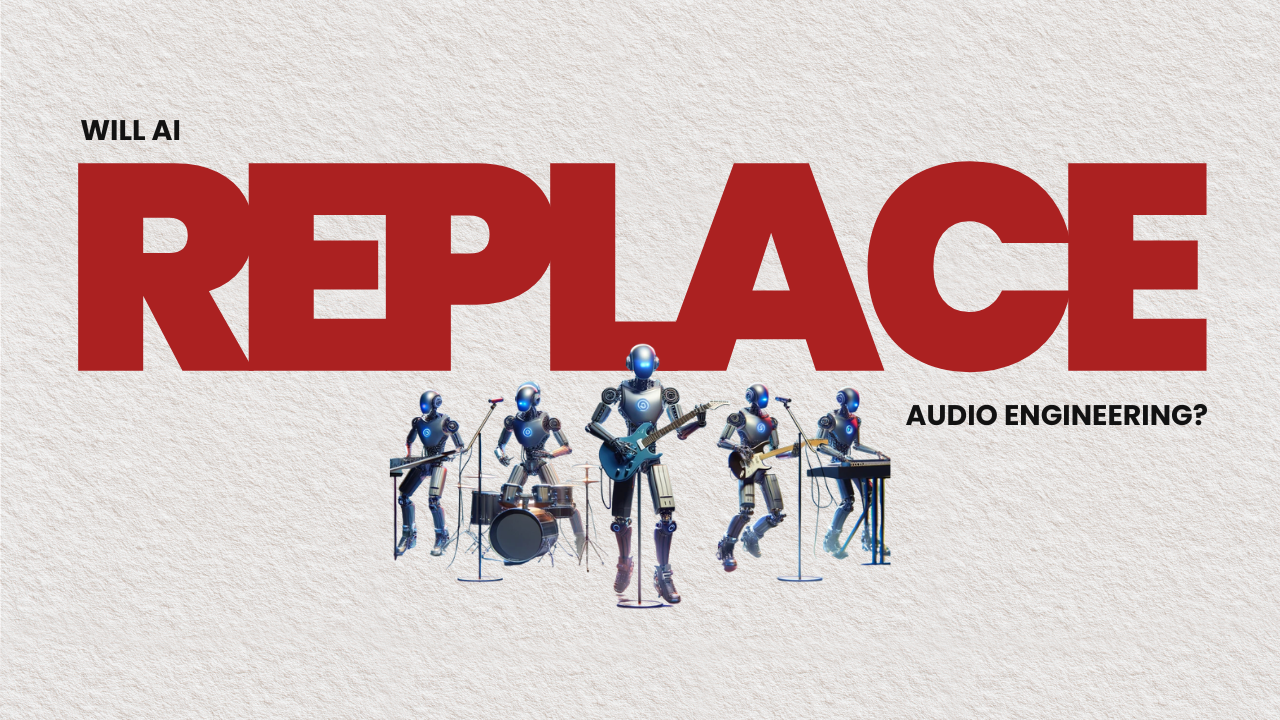
Walk into any modern studio, open any DAW, or scroll through any music forum, and one thing is clear: artificial intelligence is no longer coming, it is already here. From automated mixing tools to AI-assisted mastering and stem separation, the workflow of an audio engineer is evolving in real time. The real question is not whether AI will touch audio engineering. It already has. The real question is whether it will replace it.
The answer is more nuanced than a simple yes or no.
The Rise of AI in Audio
AI has rapidly become a powerful assistant in music production. Tools today can analyze multitrack sessions, apply EQ, compression, panning, and even deliver a polished mix in minutes.
For independent artists, this is a game changer. What once required expensive studio time and years of technical training can now be done with a few clicks. Platforms offering automated mixing and mastering promise “release-ready” results almost instantly, lowering the barrier to entry for creators worldwide.
AI also excels in technical problem-solving. Noise reduction, vocal cleanup, loudness normalization, and tonal balancing are all areas where machine learning thrives. These are tasks rooted in measurable data, and AI is incredibly good at optimizing measurable outcomes.
But audio engineering has never been just about measurable outcomes.
What AI Actually Replaces
To understand AI’s impact, you have to separate the craft into layers.
AI is already replacing or heavily assisting in:
- Basic mixing decisions
- Mastering for streaming platforms
- Audio cleanup and restoration
- Template-based workflows
- Entry-level engineering tasks
These are the repeatable parts of the job. The “80 percent” that follows patterns, standards, and predictable outcomes.
In fact, some projections estimate a significant shift in the profession, with sound engineering roles facing measurable disruption risk in the coming decade.
And if we are being honest, this shift was inevitable.
Audio engineering has always had a technical barrier. AI is removing that barrier.
What AI Cannot Replace
Now we get to the part that actually matters.
AI does not understand culture.
It does not understand emotion.
It does not understand intent.
A mix is not just about balance. It is about perspective.
A great engineer is making thousands of micro-decisions based on taste, experience, and feeling. When to break the rules. When distortion is better than clarity. When a vocal should feel uncomfortable instead of perfect.
AI works on patterns. Great engineers create moments that break patterns.
Even in controlled environments, studies and real-world comparisons continue to show that human engineers outperform AI when it comes to final musical quality and emotional impact.
And in unpredictable environments like live sound, the gap becomes even more obvious. Real-time decision-making, adapting to energy in the room, handling technical failures on the fly, these are human skills rooted in awareness, not algorithms.
The Real Shift: Perception and Expectations
Here is where things get interesting.
AI may not replace top-tier engineers, but it is already reshaping how clients think.
“Clients are starting to expect faster turnarounds and lower prices because the computer can just do it.”
That shift in expectation is arguably more disruptive than the technology itself.
Artists now have options. They can:
- Use AI for speed
- Use engineers for quality
- Or combine both
This creates a new middle ground, and that is where the future of audio engineering lives.
The Hybrid Engineer
The engineers who will thrive are not the ones fighting AI. They are the ones using it.
AI becomes:
- A starting point, not the final product
- A tool for speed, not identity
- A way to handle volume, not replace taste
Instead of spending hours on technical setup, engineers can focus more on creative direction, sonic identity, and client experience.
This is where platforms like EngineEars naturally fit into the conversation. As access to tools becomes easier, what artists value shifts toward trust, relationships, and proven results. Marketplaces that connect artists with real engineers help bridge the gap between convenience and quality, especially in a world where anyone can generate a “decent” mix, but not everyone can deliver a great one.
So, Will AI Replace Audio Engineers?
No.
But it will replace average work.
It will replace engineers who rely only on technical ability without developing taste, identity, or relationships.
It will replace the idea that access to tools equals value.
At the same time, it will elevate engineers who:
- Understand artists, not just audio
- Build a recognizable sound
- Deliver an experience, not just a file
- Move fast without sacrificing intention
Final Thought
AI is not the enemy of audio engineering. It is a filter.
It removes the bottom layer, compresses the middle, and amplifies the top.
The barrier to entry is gone. The barrier to excellence just got higher.
And in that reality, the question is no longer “Will AI replace engineers?”
It is: who is actually irreplaceable?
