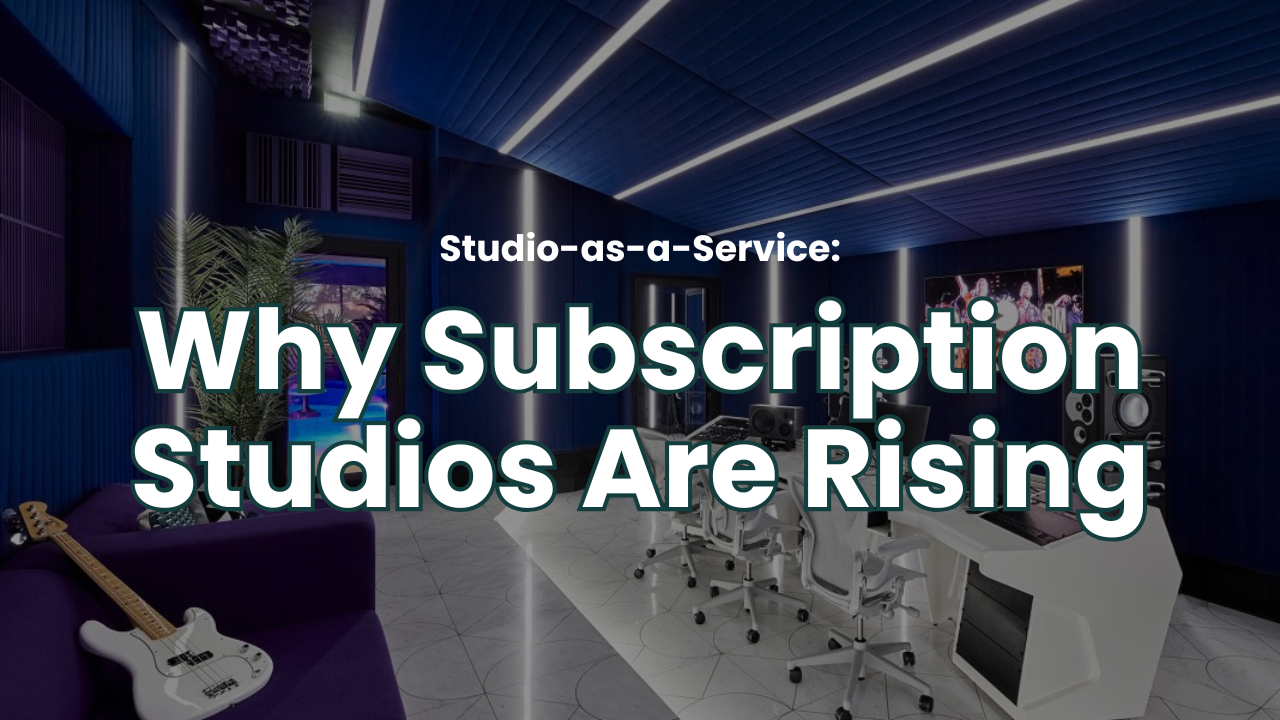
Studio-as-a-Service: Why Subscription Studios Are Taking Over Cities
Studio-as-a-Service is changing how music gets made. This subscription studio model replaces hourly bookings with flexible access, giving artists more control over their creative process.
For years, recording studios operated on a simple structure. Book a session, pay by the hour, complete the project, and leave. That system worked when access to equipment defined the industry. It no longer fits how music is created today.
Artists now move faster, collaborate more often, and release music more consistently. The traditional model struggles to keep up. In its place, Studio-as-a-Service continues to expand across major cities.
Access Over Ownership in Subscription Studios
Owning a full studio setup used to be the goal. High costs made that unrealistic for most artists, which gave studios their advantage. That advantage has narrowed.
Today, artists can produce high quality music from home using tools like Pro Tools or Ableton Live. What they lack is not gear. They lack consistent access to professional environments when it matters most.
Subscription studios solve that problem. Instead of paying high hourly rates, artists pay a monthly fee for ongoing access. That shift lowers the barrier to entry and improves flexibility.
Artists no longer think in sessions. They think in workflow.
Why Studio-as-a-Service Improves Creative Output
Creativity does not follow a schedule. Hourly bookings force artists to create under pressure, which leads to rushed decisions.
Subscription studios remove that friction. Artists return to the same room, the same setup, and the same environment whenever they need.
Consistency improves output. Engineers understand the room. Artists feel more comfortable experimenting. Sessions become more productive because less time is spent adjusting.
The result is not just more music. It is better music.
Subscription Studio Model Creates Stable Revenue
Studios face constant pressure in urban markets. High rent, inconsistent bookings, and competition make the traditional model difficult to sustain.
The Studio-as-a-Service model creates predictable income. Instead of relying on one-time bookings, studios build recurring revenue through memberships.
This approach increases utilization. Empty rooms generate no income. Subscription members keep spaces active throughout the week.
Studios shift from selling time to selling access. That difference stabilizes the business long term.
Community Is the Advantage of Studio-as-a-Service
The strongest subscription studios offer more than space. They build communities.
Artists working within the same membership connect naturally. Collaborations happen in shared sessions and common areas. That environment creates opportunities beyond recording.
For independent artists, access to a creative network can accelerate growth faster than working alone.
Many studios are taking inspiration from creative hubs like Soho House, where community drives value just as much as the space itself.
Technology Powers Subscription Studios
Running a subscription studio requires strong infrastructure. Booking, payments, collaboration, and file management all need to work together.
Platforms like EngineEars help support this system by allowing artists to manage projects, hire engineers, and handle revisions in one place. This reduces friction between the creative and business sides of a release.
Studios also rely on tools like Splice for collaboration and asset management, showing how digital tools support physical studio spaces.
For more on how platforms support modern workflows, visit https://engineears.com
Flexibility Wins in Major Cities
Cities move fast. Artists need solutions that match that pace.
Studio-as-a-Service provides flexibility. Members can book shorter sessions, work during off-peak hours, and return without committing to large upfront costs.
This model supports how artists actually create. Ideas start quickly, evolve over time, and improve through repetition.
Studios adapt to the artist instead of forcing the artist to adapt to the studio.
The Long Term Shift Toward Studio-as-a-Service
Studio-as-a-Service reflects a broader shift toward access-based models.
Music creation now mirrors industries like software and media, where users subscribe instead of making one-time purchases. Companies like Adobe and Netflix helped normalize this behavior.
Studios that adopt this model position themselves for long term growth. Studios that resist it risk becoming less relevant.
Final Thought
The recording studio is evolving. It no longer exists as just a place to record. It operates as part of a larger creative system.
Studio-as-a-Service supports that shift. It removes friction, improves consistency, and builds community around the creative process.
Artists gain flexibility. Studios gain stability. The model works because it reflects how music gets made today.
The shift is already happening. The only question is who adapts first.
