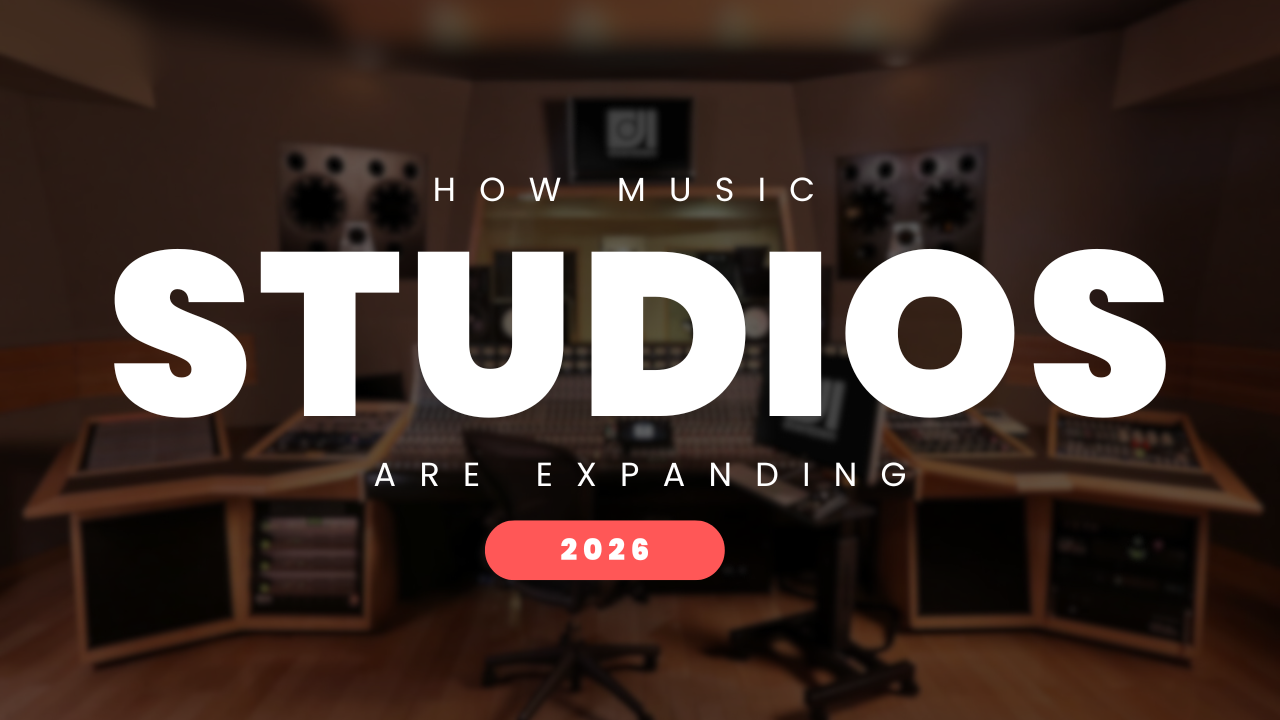
The modern recording studio is no longer defined by four walls, a control room, and a vocal booth. In 2026, studios sit at the intersection of technology, culture, and content… evolving from service providers into creative ecosystems.
This shift isn’t speculative. It’s measurable, structural, and already reshaping how music is made, experienced, and monetized.
The Studio Is No Longer Just for Music
The global recording studio market reached approximately $6.2 billion in 2025, driven not just by music production, but by a surge in podcasts, video content, and branded media.
Studios today serve:
-
Independent artists
-
Podcasters and content creators
-
Brands and agencies
-
Film, gaming, and streaming productions
This diversification is not optional, it’s survival. With home recording setups more accessible than ever, studios have been forced to move up the value chain. What remains valuable is not access to gear, but access to expertise, environment, and experience.
From Recording Spaces to Creative Hubs
A clear signal of this evolution is the rise of multi-purpose studio environments.
Major players are investing in hybrid creative campuses that blend:
-
Recording studios
-
Broadcast and radio spaces
-
Content production labs
-
Event venues
Apple’s new Los Angeles facility is a prime example—built to host live performances, produce content, and create fan-facing experiences under one roof.
This model reflects a broader shift: studios are becoming destinations, not just service providers.
The Rise of the Independent Artist Economy
Independent artists are now the dominant force driving studio demand.
But their needs are fundamentally different:
-
Shorter, more flexible sessions
-
Hybrid workflows (home + studio)
-
Remote collaboration capabilities
-
Faster turnaround times
Studios that thrive in 2026 are those that adapt to this reality, offering modular services instead of rigid booking models.
This is where platforms like EngineEars naturally fit into the ecosystem. As workflows become more distributed, the ability to connect artists with vetted engineers, streamline project management, and enable remote collaboration becomes a critical extension of the studio itself… not a replacement for it.
Technology Is Reshaping the Studio’s Core Value
1. AI as a Creative Partner
AI is now embedded in the production process:
-
60% of producers use AI for ideation
-
30% actively integrate it into final productions
Studios are no longer gatekeepers of technical knowledge, they are curators of how technology is used creatively.
2. Remote Collaboration Is Standard
Roughly 70% of music collaborations now include remote elements.
This has expanded the studio’s reach globally, while simultaneously increasing competition. A studio in Los Angeles is no longer competing locally.. it’s competing everywhere.
3. Immersive Audio Is Redefining Quality
Spatial audio and Dolby Atmos are quickly becoming baseline expectations, not premium add-ons.
Studios are investing heavily in immersive rooms and advanced monitoring environments, capabilities that cannot be replicated in a bedroom setup.
Experience Is the New Differentiator
If technology is accessible and collaboration is global, what makes a studio matter?
Experience.
Studios are leaning into what cannot be digitized:
-
Acoustically perfect rooms
-
High-end analog gear
-
Creative energy and collaboration
-
Artist development and mentorship
Even historically significant studios are modernizing, integrating immersive audio rooms and new technologies to stay relevant while preserving their identity.
At the same time, some studios are expanding into physical media, live sessions, and community-driven initiatives—offering artists tangible ways to connect with audiences beyond streaming.
New Revenue Models Are Emerging
Studios in 2026 are no longer reliant on hourly bookings alone. Instead, they’re building layered revenue streams:
-
Remote mixing and mastering services
-
Subscription-based creative access
-
Content production for brands and platforms
-
Educational programs and workshops
-
Live sessions and fan experiences
This shift reflects a broader truth: studios are becoming media companies.
The Studio as an Ecosystem
The most important transformation isn’t technological, it’s structural.
Studios are no longer isolated spaces. They are nodes in a larger network that includes:
-
Artists
-
Engineers
-
Platforms
-
Content channels
-
Audiences
Success now depends on how well a studio integrates into that network.
In this environment, tools that extend a studio’s reach. Whether through collaboration, discovery, or workflow management, become part of the infrastructure. Not every studio needs to adopt every solution, but the direction is clear: connection is as important as acoustics.
Looking Ahead
The role of the music studio will continue to expand, not contract.
As content demand grows and creative workflows become more distributed, studios will anchor the parts of the process that require:
-
Precision
-
Collaboration
-
Environment
-
Human judgment
The studios that win won’t just offer better rooms. They’ll offer better ecosystems.
And in 2026, that’s the difference between being a place people record and a place where careers are built.
